Can Artificial Intelligence Truly Build “Emotional” Artwork? By Gustav Woltmann
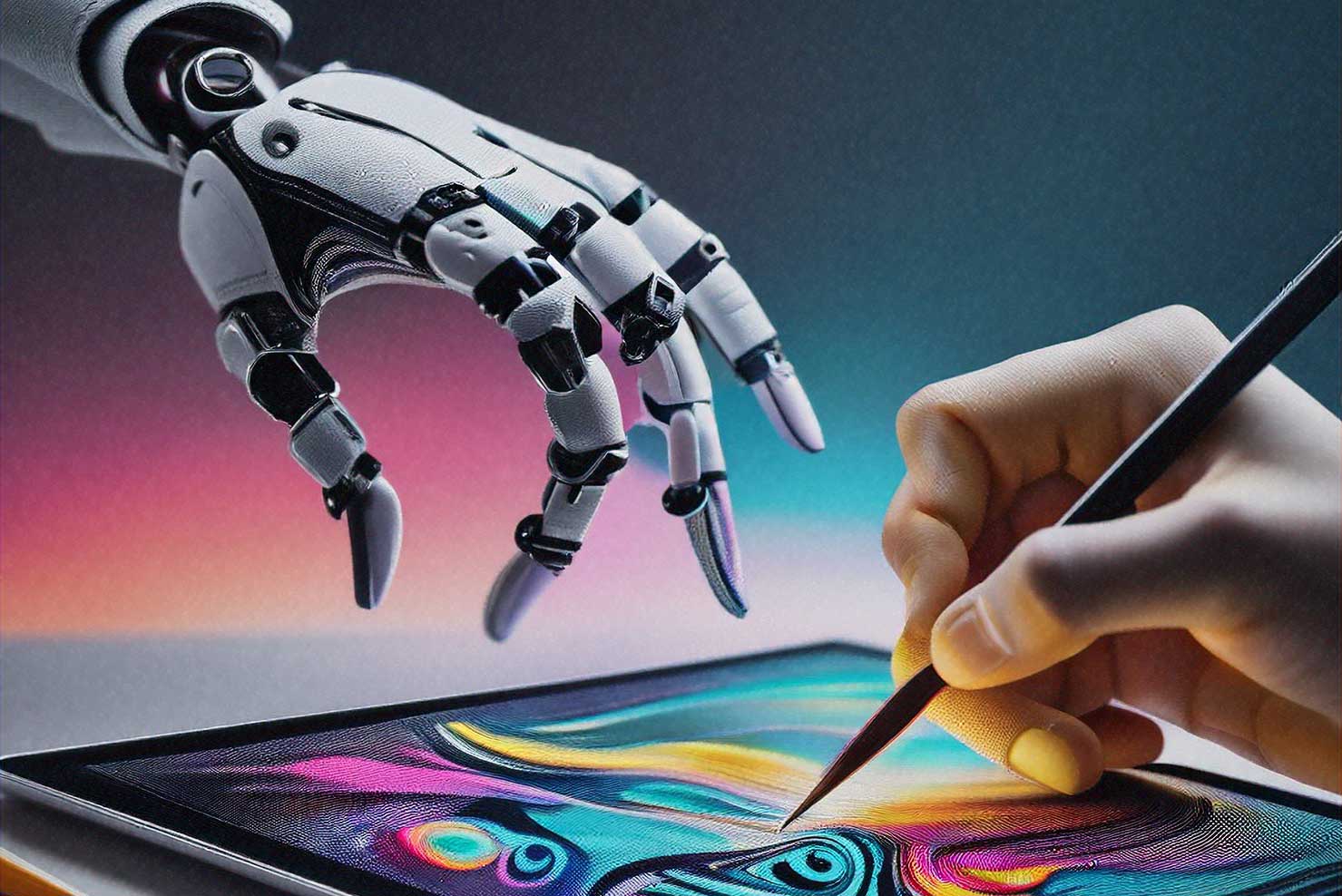
Synthetic intelligence has moved promptly from specialized novelty to Resourceful collaborator. AI now creates paintings, new music, poetry, and film imagery that Lots of individuals describe as “emotional.” This raises a essential query: is AI expressing emotion, or just simulating it? The excellence matters mainly because emotion has lengthy been regarded central to significant art, shaping how we worth authorship, authenticity, and artistic intent. Let us solution these inquiries with me, Gustav Woltmann.
How Individuals Historically Outline Psychological Artwork
For most of historical past, psychological artwork is recognized to be a direct extension of human internal lifetime. Artwork was not merely a product to get eaten, but a method of communication—an try to externalize emotions that can not be absolutely expressed through regular language. No matter if as a result of cave paintings, spiritual icons, symphonies, or novels, emotional art continues to be valued for its perceived link to lived knowledge.
At the middle of the definition is intention. Audiences have prolonged assumed that guiding a going artwork lies a acutely aware mind that felt something initial. Grief expressed through a requiem, longing embedded inside a really like poem, or rage conveyed by means of protest art is understood as authentic since it originates from personalized emotion. Even if the artist’s biography is unfamiliar, viewers have a tendency to imagine an emotional presence guiding the work.
Struggling and wrestle have also performed a big position in how emotional art is framed. Numerous cultural narratives hyperlink artistic depth to hardship, reinforcing the concept impressive artwork have to be “acquired” by means of expertise. This belief has elevated works established in periods of war, exile, ailment, or oppression, suggesting that emotion gains legitimacy by way of ache. Whilst not universally true, this Affiliation has shaped how audiences interpret sincerity and depth.
An additional defining feature is vulnerability. Psychological art frequently exposes something non-public—dread, want, doubt, or hope—making the artist emotionally obvious into the viewers. This perceived openness results in rely on. Viewers come to feel They're encountering not merely an item, but a fragment of another human being’s internal globe. The psychological bond shaped is relational instead of technological.
Importantly, regular definitions of psychological art do not have to have universal comprehending. Emotion in artwork has constantly been subjective and culturally shaped. What moves a person viewers might go away Yet another untouched. Yet the idea remains that emotional meaning is anchored in human consciousness, regardless of whether interpretation varies.
With this framework, emotion in art is inseparable from humanity by itself. It is rooted in memory, embodiment, and mortality—features that machines will not possess. This is certainly why the emergence of AI-generated artwork feels disruptive. It challenges a hundreds of years-old belief that psychological expression is uniquely human, forcing a reconsideration of whether or not emotion in art is described by its origin or by its effect on individuals who encounter it.
How AI Makes Artwork
Artificial intelligence generates art by processes fundamentally diverse from human creativity. As an alternative to drawing from own expertise, emotion, or intention, AI devices operate via pattern recognition, statistical modeling, and prediction. Knowledge this difference is essential to assessing no matter if AI-created artwork may be deemed emotional in any regular perception.
Most creative AI techniques are qualified on wide datasets of human-built work—paintings, songs, literature, pictures, or films. For the duration of teaching, the product identifies recurring buildings: how sure coloration combos Express temper, how rhythm influences psychological tone, or how term preference alerts disappointment, Pleasure, or pressure. The process would not have an understanding of these features conceptually; it learns correlations between inputs and outputs.
When prompted to create artwork, AI would not “make your mind up” what to precise. In its place, it calculates which combos of things are statistically most probably to fulfill the request. A melancholic painting, for example, emerges not from disappointment but from figured out associations involving visual cues as well as the label “melancholy.” The process is nearer to stylish mimicry than self-expression.
Importantly, AI has no consciousness of which means. It can not reflect on its output, feel attachment to it, or choose no matter if it succeeded emotionally. Evaluation occurs externally, through human feed-back, rankings, or reinforcement devices that enhance long term outputs. What increases is just not knowing, but alignment with human preference.
Human involvement continues to be central at every single stage. People today select the coaching details, outline aesthetic objectives, generate prompts, and select which outputs are worth sharing. In lots of instances, the psychological coherence of AI art relies upon greatly on the clarity and sensitivity of human course. The machine capabilities as an amplifier rather then an originator.
This process challenges intuitive Concepts about creativity. AI artwork is not spontaneous or expressive from the human sense, still it can be amazingly efficient at reproducing psychological type. It demonstrates that Substantially of what humans figure out as emotional expression follows discernible designs that can be replicated with no emotion.
Eventually, AI provides art by modeling how emotional expression appears to be, sounds, or reads—not by suffering from emotion itself. The result is artwork which will truly feel psychological to audiences, while remaining completely mechanical in its development, boosting tough questions on irrespective of whether emotion in art is outlined by course of action, intention, or notion.
Emotional Effect vs. Psychological Intent
A central rigidity in debates about AI-generated art lies while in the distinction between psychological intent and emotional influence. Usually, both of these principles have been closely connected. Human artists come to feel a little something, deliberately express it, and audiences respond emotionally. AI disrupts this sequence by getting rid of intent even though generally preserving effects.
Emotional intent refers to the creator’s internal condition and function. Every time a human artist results in, emotion guides decisions—what to incorporate, what to depart ambiguous, and when to halt. Intent implies company and meaning: the belief that the artwork is really a deliberate act of communication from 1 thoughts to another. This belief strongly shapes how audiences value art, often deepening emotional engagement when intent is assumed.
Emotional impact, by contrast, exists entirely throughout the viewer or listener. It's the disappointment, awe, comfort and ease, or unease an artwork makes, in spite of how or why it had been manufactured. Importantly, affect isn't going to call for understanding of the creator’s emotions. Individuals are routinely moved by anonymous is effective, historic artifacts, or normal phenomena that carry no conscious intent at all. A stormy seascape, a ruined building, or a fraction of tunes can evoke sturdy emotion without having an identifiable emotional resource.
AI-produced art occupies this hole. When it lacks emotional intent, it could still deliver psychological affect by replicating formal features regarded to bring about human responses. Viewers could feel moved right before figuring out—and even caring—that a machine generated the perform. In some cases, the psychological response takes place very first, with questions of authorship arising only afterward.
This raises an not comfortable issue: if emotion is truly felt with the audience, does the absence of intent invalidate the practical experience? For some, recognizing that no person felt something guiding the function diminishes its this means, breaking the sense of relationship. For Other individuals, the psychological response by itself is sufficient, irrespective of origin.
The excellence matters mainly because it shifts exactly where emotion in artwork is located. If emotion calls for intent, then AI can only imitate psychological art. If emotion resides from the encounter with the audience, then AI turns into a authentic emotional actor, Irrespective of its lack of sensation. The unresolved pressure between these views displays broader uncertainty about whether art is outlined by generation, reception, or the relationship amongst The 2.
The Function of Human Affect
Regardless of the growing autonomy attributed to artificial intelligence, AI-produced artwork continues to be deeply shaped by human influence. Much from running in isolation, Resourceful AI methods are embedded in levels of human conclusion-creating that guidebook, constrain, and in the long run give intending to their output. Understanding this influence is crucial to evaluating statements about psychological authenticity.
Human involvement starts with facts range. AI models are skilled on collections of human-designed artwork that by now consist of psychological language, cultural symbols, and aesthetic values. The psychological features existing in AI-created do the job are inherited, not invented. They replicate generations read more of inventive Conference, filtered as a result of modern tastes and biases embedded in the datasets.
Prompting further directs emotional tone. When users ask an AI to create some thing “nostalgic,” “tender,” or “disturbing,” they provide psychological framing that styles The end result. The greater distinct and emotionally literate the prompt, the more coherent the output tends to be. Within this sense, individuals work as psychological translators, converting subjective feeling into instructions a equipment can abide by.
Curation is Similarly significant. AI makes a lot of outputs, but people decide which ones make any difference. Collection, modifying, and presentation all form how the function is perceived. A discarded image may very well be emotionally flat, when a chosen 1 seems highly effective—not since the machine enhanced, but for the reason that a human identified resonance.
Even interpretation is guided by human context. Audiences carry their particular memories, anticipations, and cultural frameworks to AI art, often projecting this means the place none was intended. Awareness that a bit was generated by AI can possibly diminish or intensify emotional reaction, dependant upon individual beliefs about creative imagination and authenticity.
Seen by doing this, AI is fewer an impartial artist and more a reflective floor. It rearranges emotional indicators currently put into it by human tradition and highlights styles people reply to. The emotional ability attributed to AI art is hence not evidence of equipment feeling, but of human affect operating at just about every stage—from development to notion.
As opposed to changing human emotion in art, AI concentrates it, redistributes it, and reframes it. The device’s role is complex, but the emotional compound remains unmistakably human.
What AI Alterations About Artwork
Artificial intelligence won't merely insert a new Device into the creative course of action; it alters how art is comprehended, valued, and judged. By separating psychological outcome from emotional knowledge, AI worries assumptions that have shaped creative society for centuries. The result is not the disappearance of human creativeness, but a redefinition of its boundaries.
A person significant shift could be the decentering of the artist’s inner daily life. Common artwork criticism frequently prioritizes biography, intention, and personal battle. AI-produced artwork weakens this framework by developing function with out a lived narrative guiding it. Subsequently, audiences are compelled to confront the function itself as opposed to the Tale of its maker. Indicating will become fewer about who created the art and more about how it is received.
AI also exposes just how much emotional expression relies on construction. If a machine can reproduce moods by means of patterns of colour, rhythm, or language, then emotion in art isn't purely spontaneous or mysterious. This does not cheapen emotion, however it reveals that emotional communication is, in part, a learned system—one that can be modeled, repeated, and scaled.
Another improve lies in accessibility. AI lowers technological boundaries, letting persons devoid of official education to supply polished Imaginative function. This democratization shifts artistic benefit faraway from execution and towards notion, curation, and intent. The emotional importance of artwork progressively is determined by why some thing was made And exactly how it truly is framed, as opposed to how tough it absolutely was to make.
AI also complicates authorship. When Innovative output emerges from collaboration among human prompts, machine technology, and algorithmic constraints, ownership gets to be diffuse. This blurring worries authorized, ethical, and cultural norms bordering originality and emotional authenticity.
Ultimately, AI reframes artwork as being a shared psychological Room instead of a solitary act of expression. It pushes emotion out of your creator on your own and into the relationship involving program, viewers, and context. In doing so, AI does not do away with emotional artwork—it forces a more straightforward examination of where by emotion in art certainly resides and why it matters.